
NECK PAIN CHIROPRACTOR · JACKSONVILLE, FL
Neck pain treatment that addresses the root cause of the pain.
You don’t have to keep planning your life around neck pain. We’ll find the structural cause and give you a clear path forward towards healing.





★★★★★
5.0 from nearly 200 Google reviews
Dr. Jon Dandridge · ~10 years helping Jacksonville move better
✓ Exam + X-rays included · ✓ Same-day adjustment if appropriate · ✓ Evening and Saturday hours
“I can sleep through the night, I don’t have that pain anymore. It’s night and day.” — Bryant, tree surgeon and Beyond Bones patient
Watch: How chiropractic care treats neck pain
QUICK ANSWER
What causes neck pain, and can a chiropractor help?
Neck pain is one of the most common reasons people look for chiropractic care. About 203 million people worldwide were living with it in 2020, and that number is projected to reach 269 million by 2050 (GBD 2021, The Lancet Rheumatology, 2024). In my experience, the overwhelming majority of cases do not appear out of nowhere. They’re the result of stress building up in the joints, discs and muscles of the neck over time: hours of looking down at screens, poor posture held for months or years, too little movement, and old injuries.
Research supports chiropractic care for neck pain. In a randomized trial, spinal manipulation (the adjustment chiropractors perform) relieved neck pain more than medication in both the short and long term. Your care starts with a thorough exam and X-rays (when indicated) so we can actually see the structural imbalance driving your pain. From there, we build a plan to correct the actual cause instead of chasing temporary symptomatic relief.
Written and reviewed by Dr. Jon Dandridge, DC · Last reviewed October 2026
“I can move my neck again, I can sleep through the night.” Jacksonville patients on life after neck pain
5.0 stars from nearly 200 Google reviews
“Before, I was almost completely immobile, I had a fight to walk. I could only sleep for a couple of hours and had some shooting pains down into my legs. I could only do so much, I was very limited.
But after a few weeks of getting adjusted, my overall quality of life has improved. I can move my neck like this, I can sleep through the night, I don’t have that pain anymore. It’s night and day. I’m just excited about what my body is capable of now.”
Bryant
Tree surgeon and patient of Beyond Bones Alignment Studio
★★★★★
Twenty years of back pain, gone in five weeks
“I’ve always had issues with my back, worked construction and a car accident 20 years ago made it worse nagging pain, [sciatica] and waking up stiff out of bed was something that no prescription would fix. Thanks to Jon on my first appointment I felt so much better and now after 5 weeks of therapy pain is gone. I can’t thank you enough.”
L. Cruz · Google review
★★★★★
X-rays that explained everything, and care that keeps me well
“I consulted with Dr. Jon due to severe lower back pain and was impressed with his care. He was extremely kind and provided a detailed explanation based on my X-ray exams (done at the clinic), which gave me a lot of confidence… After resolving the crisis, I have bi-weekly maintenance appointments, and this has greatly helped maintain my quality of life. I highly recommend Dr. Jon’s work!!”
Carla S. · Google review
SOUND FAMILIAR?
Neck pain keeps you avoiding the things you love.
We work tirelessly to keep you from becoming another statistic. You don’t have to be the driver who can’t turn to check a blind spot, the parent who can’t look up at the game without pain, or the person who ends every workday with a stiff neck and a headache. Being our best for our family, colleagues, and community is what truly matters, and it’s what we want to get you back doing.
It can be easy to give in and believe that neck pain is “normal,” or to justify it because “everybody has it.” But common and normal are not the same thing. The fact that all your coworkers have a stiff neck doesn’t mean you’re stuck with it too. You can heal and improve, and we are here to help you do just that.
“If you’re tired of planning your day around your neck pain, you’re not alone. In most cases we find pain to be the result of stress that has built up and accumulated over time, and unwinding that stress is exactly what we do very well.”
— Dr. Jon Dandridge
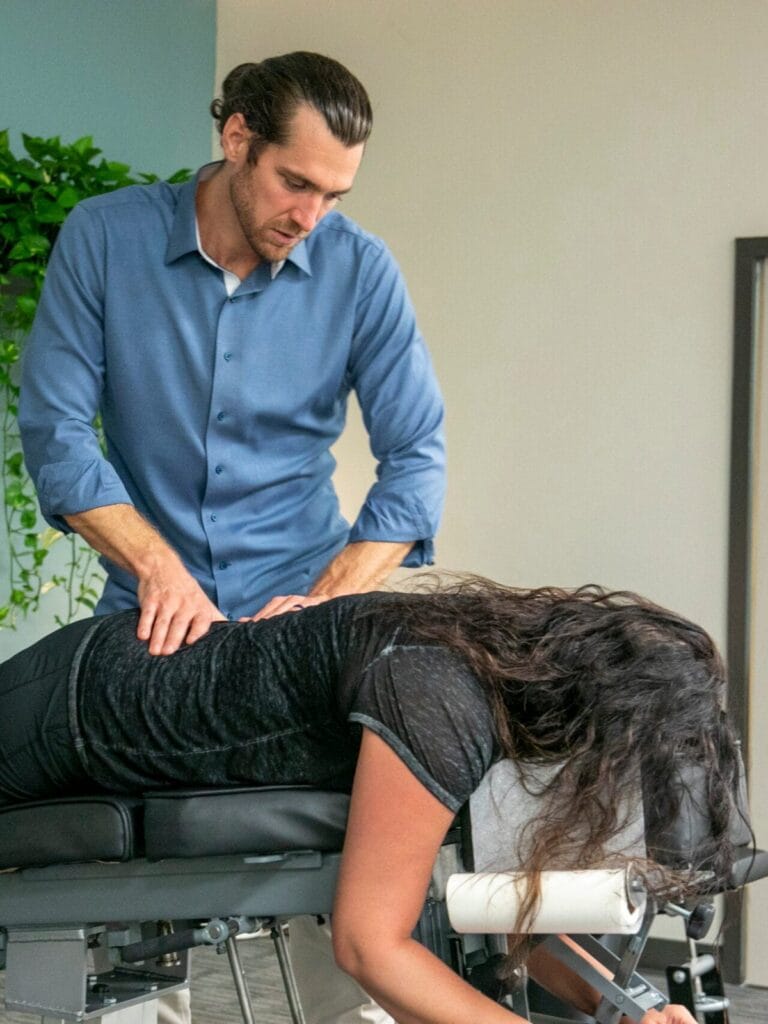
MEET YOUR GUIDE
A chiropractor who looks for the cause, not just the spot that hurts
Dr. Jon Dandridge, DC · Graduate of Sherman College of Chiropractic · Certified in the Syntropy Chiropractic technique
Dr. Jon has spent nearly a decade obsessed with delivering world-class chiropractic care to the Jacksonville community. Time and again, he has watched a balanced, healthy spine set the stage for remarkable changes in people’s health, and he has seen that regular chiropractic care is an irreplaceable piece of the puzzle.
He knows what it’s like to ask a lot of your body. Dr. Jon played NCAA Division I and professional baseball, and he credits chiropractic with keeping him healthy enough to make that career possible.
He believes there’s no better investment than building your body’s resilience and ability to adapt to the stresses of life. Every goal you have flows downstream from a strong, healthy body and a fully connected body and mind.
Care in English, Spanish and PortugueseLeads Raiz da Cura, a nonprofit running chiropractic mission trips across South AmericaFormer NCAA Division I and professional baseball player
~10 years
serving the Jacksonville community
★ 5.0
from nearly 200 Google reviews
10,000+
patients served
Why healthy joints are the key to a body that feels and moves with ease
When you make chiropractic a regular part of your wellness strategy, you move better, hurt less and get more out of life. We see it in our practice every day, and it comes down to how your joints are built and how they connect to your nervous system.
Every joint in your spine, from those in your low back and pelvis to your neck, is built similarly and communicates with your nervous system constantly. When joints stop moving well, they stiffen, irritate nearby nerves and joint tissue, and degenerate faster, ultimately disrupting your brain’s connection to your body. Low back pain, sciatica, neck pain and headaches can all be consequences of this process. Our job is to restore healthy motion and balance to those joints so your body can do what it’s designed to do: heal and thrive.
Joints need motion to stay healthy
In animal studies, spinal joints that were held still developed degenerative changes that grew the longer they were immobilized (Cramer et al., 2004). In people, joint cartilage thins when normal movement is lost (Vanwanseele et al., 2002).
Your joints communicate with your brain
Research suggests adjustments change the signals your spinal joints and muscles send to your nervous system, which can influence muscle control and how you feel pain (Pickar, 2002).
Regular care avoids the crisis
In a randomized trial, people with recurring back pain on consistent chiropractic maintenance care had about 13 fewer days of bothersome back pain over a year than those who came in only when it hurt (Eklund et al., 2018).
A simple 3-step approach towards a healthier spine
A structural solution to a structural problem. Here’s exactly what happens when you book.
2. Develop the Plan
We analyze your images together to develop a clear understanding of the problem and the path forward.
Life without
neck pain
1. Discovery Session
A complete consultation including X-rays to visualize the structural imbalance behind the pain.
3. Remove the Interference
Begin a 4–6 week care plan designed to peel back the layers of stress causing the pain. Time and consistency is how we win.
1. Discovery Session
A complete consultation including X-rays to visualize the structural imbalance behind the pain.
2. Develop the Plan
We analyze your images together to develop a clear understanding of the problem and the path forward.
3. Remove the Interference
Begin a 4–6 week care plan designed to peel back the layers of stress causing the pain. Time and consistency is how we win.
Life without neck pain
No long-term contract required to get started
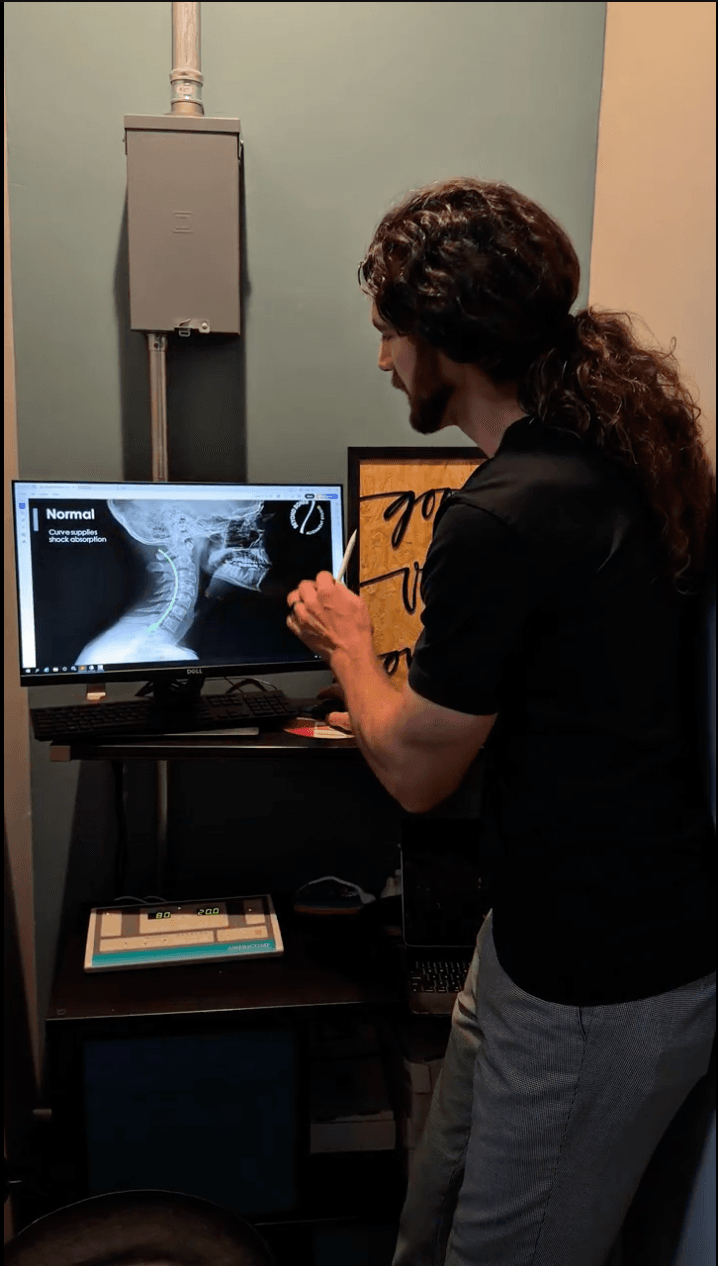
What your neck pain treatment looks like at Beyond Bones
A thorough exam and X-rays, so you finally know what’s causing your pain
Your care starts with a comprehensive exam, including X-rays of your spine, so you can see its structural integrity for yourself. A healthy neck has a gentle backward curve with a clear space between each bone where the disc sits. When that curve straightens or starts to reverse, or the disc spaces begin to thin, it shows up clearly on your images. Once you can see the problem, the path to fixing it becomes clear too.
Maybe you’ve already had images taken somewhere else and been told “everything is OK,” yet you still hurt. After analyzing thousands of spines, Dr. Jon will show you that the details really matter. Not having a fracture, dislocation or other severe pathology doesn’t mean everything is OK. Spinal health is a spectrum, and any shift away from ideal structure eventually affects how you feel and function. You’ll leave your first visit knowing what’s going on and what to do about it.
Chiropractic adjustments that restore health and balance to the spine
Your neck pain is very often a structural imbalance at its root: joints that aren’t moving the way they should, and a spine accumulating more stress than it can adapt to. We call that state subluxation, and it keeps your nervous system under stress, which eventually leads to symptoms. What we know to be true is that a structural problem requires a structural solution.
Each adjustment improves the motion and integrity of your joints. With time and consistency, your joints become healthier, stronger and more resilient to everyday stress, and as your structure improves, your symptoms tend to fade. Think of each adjustment as a reset that moves your body from a state of stress toward a state of ease. You’ll feel the difference.
Watch: Why we take X-rays on every patient
Watch: 3 ways to get natural neck pain relief during your workday
Results that compound, and strategies that keep neck pain from coming back
Your goal shouldn’t be a one-time fix, because the stresses of life never take a day off! The truth is that if you want to feel your best, regular maintenance is absolutely necessary. Ongoing adjustments keep your spine in balance and ready to adapt to whatever life throws at you. Throughout your journey in our office, you’ll get specific exercises and simple habit recommendations, like small tweaks to your sleep posture and workstation setup, that speed up your healing and help you keep your results.
3 signs your neck isn’t working the way it should
Watch: 3 signs you have a neck problem
Dr. Jon looks for these three signs when someone comes in with neck pain. They can help you tell whether your neck isn’t functioning at its best. Remember, they’re clues, individual pieces of a larger puzzle, not a diagnosis.
If any of them sound familiar, book an initial visit and we’ll find the cause together.
1. Pain or stiffness when you move your head
Your neck should move freely in every direction.
Read more
- Look down and up, as if you’re nodding yes.
- Look left and right, as if you’re saying no.
- Tilt each ear toward your shoulder.
Each of these should feel easy and pain-free. If you feel discomfort, maybe when you look over your shoulder while driving or backing out of a parking space, there may be structural imbalance causing dysfunction in the joints of your neck.
2. Waking up stiff
It takes you hours to loosen up in the morning.
Read more
If you wake up feeling locked up in your neck or upper shoulders, and it takes hours before you feel like yourself, that’s another sign of dysfunction in your neck that we can help with.
3. Headaches or pain down your arm
Symptoms that often start in the neck.
Read more
Regular headaches are a telltale sign that there may be dysfunction in your neck. So are pain, tingling or numbness radiating down your arm. Often the root of the problem is in the neck, and finding exactly where is a central objective of your first visit.
Chiropractic research and neck pain
- In a trial of 272 people with recent neck pain, spinal manipulation (the adjustment chiropractors perform) relieved pain more than medication at 12 weeks and at one year (Bronfort et al., Annals of Internal Medicine, 2012).
- A review of studies since 2000 found that spinal manipulation and mobilization reduce pain and improve function in chronic neck pain compared with other treatments, with combined approaches having the greatest impact (Coulter et al., Pain Physician, 2019).
- A study comparing 30 adults who had lost the normal curve in their neck with 30 adults who had a healthy curve found that those with a straightened neck had narrower vertebral arteries (the arteries that carry blood up through the neck to the back of the brain) and about 15% less blood flow through them (Bulut et al., Medical Science Monitor, 2016).
Where your neck pain goes from here is up to you
Option 1: Wait it out
If you keep waiting
- Acute neck pain can turn chronic, more painful, and more difficult to correct
- Potentially more pills and injections that chase the symptom
- Another year of saying no to things you love
Option 2: Fix the cause
When you fix the structure
- Less pain! Turn your head to check your blind spot without wincing
- Sleep through the night and wake up without a stiff neck
- Get back to the activities that you love!
What causes neck pain?
There are many causes of neck pain, and most tie back to daily habits, lifestyle, and an inability to adapt to the stresses of life. Your neck is built to move freely and support your head in balance. Whenever it loses that ability, symptoms can appear. These are the causes we see most often.
Poor posture and screen time
Hours of looking down strain your neck.
Read more
Phones, laptops and other screens draw your head forward into flexion with time. Your neck is not designed to stay still or hold a flexed-forward posture for hours at a time. Our joints are made to move regularly and consistently, and whenever our lifestyle keeps us from adequate movement, there is always a consequence.
If we don’t break the patterns and habits that damage our joints, the underlying structure of our spine will eventually change, which makes healing much more difficult. Small changes can make a massive difference: raise your screen to eye level, take regular breaks, get up and move and, most importantly, get adjusted on a regular basis.
Loss of the neck’s natural curve
When the curve straightens, stress builds on your joints and discs.
Read more
A healthy neck has a gentle backward curve. That curve helps your neck absorb load and keeps space open for your discs and nerves. When it straightens or starts to reverse, the joints and discs take on more stress than they should.
We see this often on X-rays. One example: a 25-year-old office worker with headaches almost every week whose neck had lost its curve and was starting to reverse, with the discs already beginning to thin. Left alone, changes like these will get worse over time. We provide the structural solution to resolve the structural problem.
Subluxation (spinal misalignment)
Joints lose proper motion and stress builds in the nervous system.
Read more
In many cases, neck pain traces back to subluxation, the core problem chiropractic is designed to correct. Joints lose proper motion, structural imbalance follows, and stress builds in the nervous system. That pressure can drive a variety of symptoms, including neck pain, stiffness and headaches.
Subluxation is closely tied to the other causes on this list. When the joints of your neck lose their ability to move fluidly, the joints and discs tend to degenerate faster, which can create a vicious cycle of pain. Specific chiropractic adjustments are the direct answer: a structural solution to a structural problem. Spinal alignment →
Degenerative disc disease
Discs in the neck wear down, narrowing the space for your nerves.
Read more
The discs between the bones of your neck keep it mobile and hold open the space where your nerves exit. As they break down and thin, that space narrows, which can press on the nerves and cause neck pain, stiffness, or pain and tingling down the arm.
Age plays a part, but so do your habits: posture, work that’s hard on the neck, smoking and old injuries all contribute. Degeneration can be slowed or even stopped, but damage that has already happened is much harder to reverse, which is another reason to start caring for your spine early. Disc injury care →
Whiplash and old injuries
Car accidents and falls can leave lasting effects.
Read more
A car accident, an old sports injury or a fall can damage the joints, ligaments and muscles of your neck in a split second. Even when the pain fades, the joints may not have regained their full function from before the accident. This is when the real damage can quietly build in the background and only become noticeable months or years later. Car accident care →
Inactivity and stress
Too little movement and too much tension add up.
Read more
Your body is designed to move, and your neck is no exception. Long stretches without movement leave the supporting muscles weak and the joints stiff and, over time, prone to degeneration. Regular movement, breaks from sitting, regular chiropractic adjustments, and activities that make you look around in all planes of motion, like frisbee, ping pong or pickleball, all help your neck stay healthy.
What you can do today
- Schedule your initial exam so you know exactly what’s causing your pain and get a clear plan to fix it. This is the most important step you can take today.
- Raise your screen to eye level, or try a standing desk, so you’re not looking down all day.
- Take regular breaks every 15–30 minutes: stand up, stretch, or walk around your building.
- Play: games like frisbee, ping pong or pickleball get you moving and looking around in ways traditional workouts never will.
- Heat or ice for 15–20 minutes, whichever feels better.
When to see a doctor right away
Go to the ER if neck pain comes with:
- A sudden, severe headache unlike any you’ve had before
- Dizziness, double vision, slurred speech or trouble swallowing
- Complete numbness, tingling and weakness in your arms that “came out of nowhere”
- Loss of balance, trouble walking, or loss of bladder or bowel control
- Fever with a stiff neck
- Severe pain after a serious fall or accident
Your neck pain questions, answered
Does chiropractic work for neck pain?
For many people, yes. In a randomized trial of 272 people with recent neck pain, spinal manipulation (the adjustment chiropractors perform) relieved pain more than medication at 12 weeks and at one year, and a 2019 review found that manipulation and mobilization reduce pain and improve function in chronic neck pain. Our focus is restoring healthy joint motion and balance so those improvements last.
What are the most common causes of neck pain?
Neck pain can come from spinal degeneration, disc herniations, muscle strain, poor posture, hours of screen time, old injuries, and even excessive mental stress and tension. To find out what’s behind yours, we start with a thorough evaluation.
What symptoms are associated with neck pain?
Neck pain often comes with reduced mobility, stiffness, headaches, muscle spasms, pain when you look in certain directions, and sometimes pain or tingling down the arm.
Can chiropractic adjustments make neck pain worse?
A proper chiropractic adjustment is only beneficial to the joints of the spine because it works to restore proper joint motion and biomechanics that have been lost due to stress.
How long after an adjustment for neck pain will I feel better?
Many people notice a difference within their first few visits. Lasting change comes with time and consistency as the structure of your neck improves. Exact timelines can be difficult to estimate, but with time and consistency, we can be very confident that we will achieve the goals we’ve set out to accomplish.
Will I need X-rays?
X-rays are an important part of our examination. They let us see the underlying structural reason you’re experiencing pain and dysfunction, and they help us set clear expectations for your healing process.
Do I need a referral to see a chiropractor?
No, no referral is necessary.
Related conditions we treat: Headaches · Migraines · Shoulder pain · Car accident injuries · Low back pain
Stop planning your day around neck pain
You deserve to move freely again. Your first step is one visit.
- Find the structural cause with a full exam and X-rays
- A clear plan, explained in plain English
- Relief without drugs or surgery
★★★★★
5.0 from nearly 200 Google reviews
NEW PATIENT OFFER
$79 $289
Consultation, exam, X-rays and same-day adjustment if appropriate. 🦃 Give Thanks for Health Promo 🦃. Offer ends November 30.
Beyond Bones Alignment Studio
2511 Myra St, Jacksonville, FL 32204
Tue & Thu 8am–8pm · Sat 9am–12pm
(904) 701-0099
Sources
- GBD 2021 Neck Pain Collaborators. Global, regional, and national burden of neck pain, 1990–2020, and projections to 2050: a systematic analysis of the Global Burden of Disease Study 2021. Lancet Rheumatol. 2024;6(3):e142-e155. DOI
- Bronfort G, Evans R, Anderson AV, Svendsen KH, Bracha Y, Grimm RH. Spinal manipulation, medication, or home exercise with advice for acute and subacute neck pain: a randomized trial. Ann Intern Med. 2012;156(1 Pt 1):1-10. PubMed
- Coulter ID, Crawford CC, Vernon H, et al. Manipulation and mobilization for treating chronic nonspecific neck pain: a systematic review and meta-analysis for an appropriateness panel. Pain Physician. 2019;22(2):E55-E70. PubMed
- Bulut MD, Alpayci M, Şenköy E, et al. Decreased vertebral artery hemodynamics in patients with loss of cervical lordosis. Med Sci Monit. 2016;22:495-500. PubMed
- Eklund A, et al. The Nordic Maintenance Care program: effectiveness of chiropractic maintenance care versus symptom-guided treatment for recurrent and persistent low back pain. PLoS One. 2018;13(9):e0203029. PubMed
- Cramer GD, et al. Degenerative changes following spinal fixation in a small animal model. J Manipulative Physiol Ther. 2004;27(3):141-154. PubMed
- Vanwanseele B, et al. Knee cartilage of spinal cord-injured patients displays progressive thinning in the absence of normal joint loading and movement. Arthritis Rheum. 2002;46(8):2073-2078. PubMed
- Pickar JG. Neurophysiological effects of spinal manipulation. Spine J. 2002;2(5):357-371. PubMed